No Falls Week
No Falls Week is a campaign dedicated to promoting safe working at height.
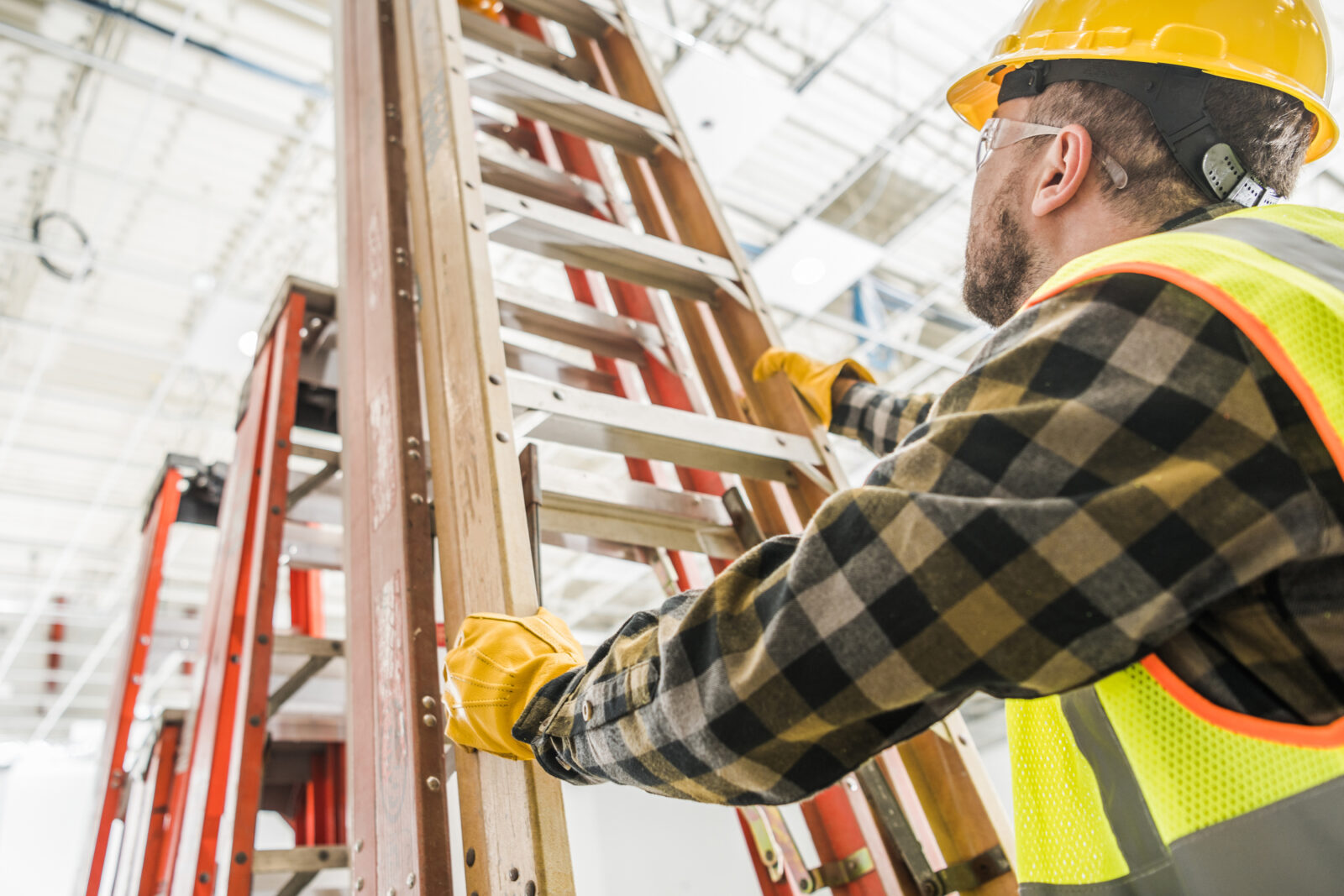
No Falls Week is a campaign dedicated to promoting safe working at height.
No Falls Week is organised by the No Falls Foundation, the first and only UK-based charity devoted exclusively to the work at height sector.
No Falls Week, running from 12 th to 16 th May 2025, is a campaign dedicated to promoting safe working at height.
Launched in 2024 in the UK, No Falls Week’s objective is simple – to raise awareness about the importance of safe working at height. Regardless of where you work, you may work in construction, manufacturing, agriculture or any other sector, the campaign aims to provide you with the knowledge, tools and inspiration to prevent falls and ensure everyone that works at height comes down safely.
Falls from height are consistently the leading cause of workplace fatalities in the UK. The latest figures from the HSE show that 50 people lost their lives due to a fall from height in 2023/2024, accounting for 30% of all workplace deaths. In the same period, there were 37,000 incidents leading to 688,000 lost days due to this hazard.
Raising awareness of the danger of working at height is crucial in preventing accidents.
The law requires that employers and self-employed contractors assess the risk from work at height and to also plan the work so it is carried out safely.
Emphasise that complacency is a factor in incidents occurring, so it’s important that staff take the time to properly plan for their tasks, e.g. ensure they have the correct access and equipment, that lanyards are checked and in good condition, etc.
Try avoiding work at height, if you can. You must otherwise prevent or arrest a fall and injury if work at height is necessary.
As an employer, you must instruct and train your employees in the precautions required. Method statements are widely used in the construction industry to help plan and manage the work and to communicate what is required to all those involved in the working at height task.
Key issues for all work at height are:
- Risk assessment
- Precautions required
- Method statements
Work at height is the biggest single cause of fatal and serious injury in the construction industry, particularly on smaller projects.
Over 60% of deaths during work at height involve falls:
- From ladders, scaffolds, working platforms and roof edges
- Through fragile roofs or rooflights
Employers and self-employed contractors must:
- Assess the risks
- Decide on the precautions required
- Record the significant findings
- Review the assessment as necessary
Precautions required
The law on work at height requires that you take account of your risk assessment in organising and planning work and identifying the precautions required.
Your objective is to make sure work at height is properly planned, supervised and carried out in a safe manner.
The approach you can adopt for work at height is to follow the work at height hierarchy of controls (detailed below). The hierarchy must be followed systematically and only when one level is not reasonably practicable may the next level be considered.
It is not acceptable to select work equipment from lower down the hierarchy e.g. personal fall arrest, such as harnesses and lanyards in the first instance.
Before working at height, you must work through these simple steps:
The hierarchy of control measures with practical examples
- Avoid working at height unless it is essential
- Prevent falls by using an existing safe place of work that does not require the use or addition of work equipment to prevent a fall
- Prevent falls by using work equipment that protects all those at risk
- Prevent falls by using work equipment that protects the individual e.g. a harness with a short lanyard which makes it impossible for a person to get to a fall position (this is called work restraint)
- Mitigate falls by using work equipment to minimise the distance and consequences of a fall and protect all those at risk e.g. nets or soft-landing systems positioned close under the work surface
- Mitigate falls by using work equipment to minimise the distance and consequences of a fall and protect the individual
- Mitigate falls by using work equipment that minimises the consequences of a fall
- Mitigate falls through training, instruction or other means e.g. ensure ladders are inspected regularly and are used by competent people
A method statement is a useful way of recording the hazards involved in specific work at height tasks and communicating the risk and precautions required to all those involved in the working at height task.
The method statement should be clear and illustrated by simple sketches where necessary. Avoid ambiguities or generalisations, which could lead to confusion. Statements are for the benefit of those carrying out the work and their immediate supervisors and should not be overcomplicated.
Equipment needed for safe working should be clearly identified and available before work starts. Workers should know what to do if the work method needs to be changed.
If you would like more information on safety while working at height, please contact us .